
Sometimes non-poets wonder what poetry is for—and there are as many answers to that question as there are poets. During difficult times, even poets will ask themselves this question, but like any passionate people, poets believe that who we are as human beings in community matters—and we take notes to write about it later.
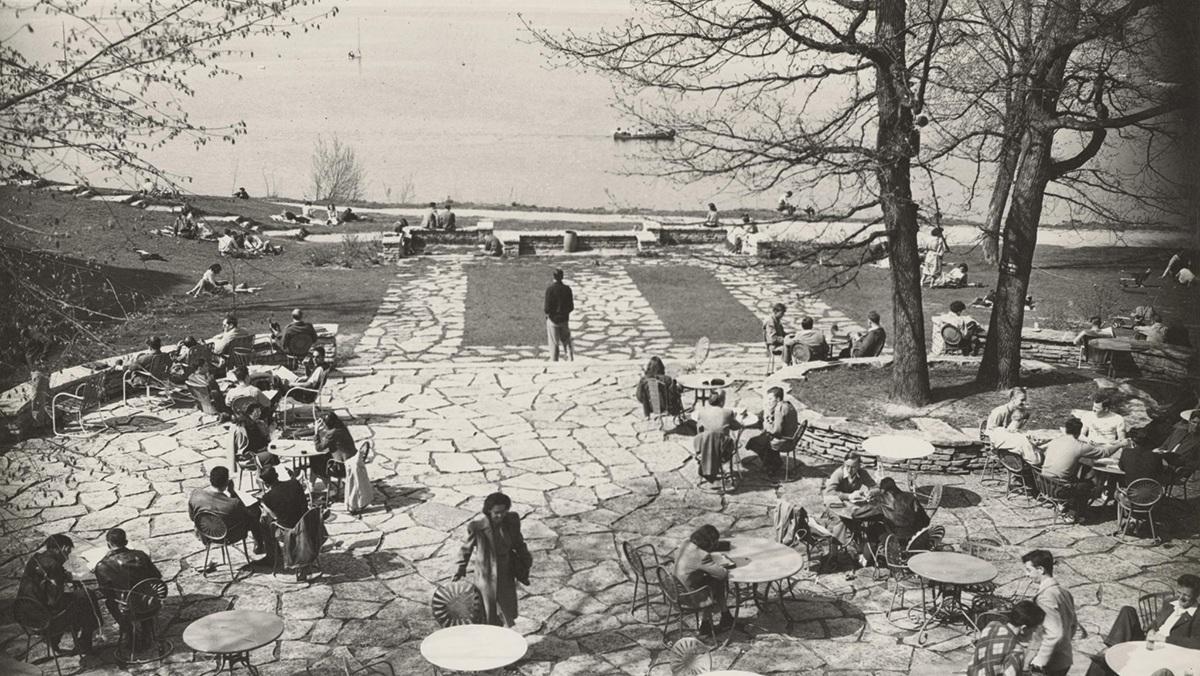
For the last seventy-five years, the hub of Wisconsin’s vibrant poetry community has been the Wisconsin Fellowship of Poets (WFOP). Since its founding in 1950, when a small group met at the University of Wisconsin-Madison Memorial Union, WFOP has gathered poets for conferences, offered contests, launched publications, and spearheaded programs. From that small initial group has grown a statewide membership of more than 500 poets.
This is especially remarkable because WFOP is run entirely by volunteers. I’m the current president, and many of our board members and regional leaders have been with WFOP for decades. WFOP has a regional structure, and long-time members like Ed Werstein, who is deeply involved with our Milwaukee-area region, are integral to the literary landscape in Wisconsin. For example, Werstein leads WFOP's hour in the annual poetry marathon hosted by Woodland Pattern, a Milwaukee-based artist collective with a focus on small-press poetry (its book center holds an estimated 25,000 titles of poetry, small-press literature, and ephemera).
Another long-time member is Cathryn Cofell, a past WFOP co-president who is a founding member of the Wisconsin Poet Laureate Commission and helped to establish the WFOP Chapbook prize. Cofell was awarded the Christopher Latham Sholes Award for outstanding encouragement of Wisconsin writers and is currently the inaugural City of Appleton Poet Laureate. “As a member of WFOP for over thirty years, I’ve had first-hand experience seeing our evolution from a small, member-focused organization to a force for poetry and a support for poets throughout the state,” Cofell says.
This June, WFOP celebrated our milestone anniversary with a three-day return to Madison, our founding town. Programming included headliner poet and essayist Ross Gay; workshops for emerging poets with Chris Chambers, Charles Payne, and Matti Powers; readings by Wisconsin Poet Laureate Brenda Cárdenas, Madison Poet Laureate Steven Espada Dawson, and Madison Youth Poet Laureate Justin Russell; as well as pickup basketball, poetry games, open mics, and panels to help attendees up their “game” when it comes to social media, submissions, and performance. We ended with an evening gala featuring more poetry, dancing, and community.
It can be hard to fully capture the spirit and energy of an in-person event in a write-up like this. But for us, the anniversary was a chance to reconnect with friends we see once a year and to celebrate the eclectic nature of poetry. There was joy, and there was anger (because we must speak of anger), and there was love.
The anniversary was also a chance for us to have hard yet necessary conversations about the future of WFOP. We’ve known since the COVID-19 pandemic that we need to evolve our outreach efforts, partnerships with arts organizations, and ability to engage new voices in leadership. Supporting poets and poetry across the state requires thinking broadly about how to reach poets wherever they are and to celebrate the rich complexity of writers who call Wisconsin home.
To start, we’ve partnered with the Leigh Yawkey Woodson Art Museum in Wausau to run a Student Ekphrastic Poetry Competition. Selected poems are displayed next to permanent collection artwork, with an annual reception for poets to share their work. Woodson Director Matt Foss says “fostering creativity in local students has been the biggest benefit of the partnership so far.” The Woodson engages with K-12 students in a number of ways, from tours to student art exhibitions, and our partnership has extended that reach. “We work hard at the museum to ensure that all the arts are considered and highlighted,” says Amalia Wojciechowski, Woodson’s assistant director and collections curator.
We’re also leveraging existing partnerships in new ways. For example, I happen to work with Brain Mill, a mid-size press located in Green Bay that strives to employ, consult, and collaborate with underrepresented voices in the publishing industry. I served as a bridge between Brain Mill and WFOP to launch a new chapbook contest for Wisconsin poets last year, and through that collaboration, two new chapbooks are now in the world: Katrina Serwe’s First Steps and Wendy Vardaman’s Thread Me an Exit.
Another recent publishing initiative by WFOP, Sheltering with Poems: Community & Connection during COVID, included voices from the early days of the pandemic and built on previous anthologies published by WFOP. We also continue to grow our literary magazine, Bramble, which we launched in 2017.
Like many organizations, WFOP learned during the pandemic years that virtual contact with members is now essential. WFOP member Tori Grant Welhouse launched our Poetry at Large series, a virtual workshop series lead by notable poets that so far has included James Crews, Barbara Crooker, Nickole Brown, Jessica Jacobs, Ed Bok Lee, and Jessica Barkdale, as well as Wisconsin Poets Laureate Emerita Marilyn L. Taylor, Karla Huston, and Margaret Rozga.
It’s important to remember that every project I’ve mentioned here—every event, initiative, and publication—happens because someone volunteered their energy and enthusiasm to make it happen. Our board, regional leaders, and members routinely take time out of their busy lives to support programs and ideas they believe in, and when they can, they offer financial support, too. Richard Swanson, a beloved member and former board secretary, and his partner Fanny Aragno recently bequeathed funds to establish The Swanson Emerging Poetry Fellowship, in partnership with Shake Rag Alley Center for the Arts in Mineral Point, which provides an award, residency, and mentorship to the selected fellow. The inaugural fellow, Charles Payne, will be in residence at Shake Rag Alley in August, offering a free workshop for the community.
Another inspiring example is The Kay Saunders Emerging Poet contest, begun in 2004, which provides an opportunity to poets who have not won a poetry contest or published widely. Previously open to WFOP members, this contest is now open to all Wisconsin poets.
Now that we’re officially a septuagenarian organization, WFOP is more committed than ever to building on our history of fomenting new ideas, celebrating the achievements of fellow poets, and offering opportunities to the next generation of poets in Wisconsin.
We’re a success story with an ending far from written.


