
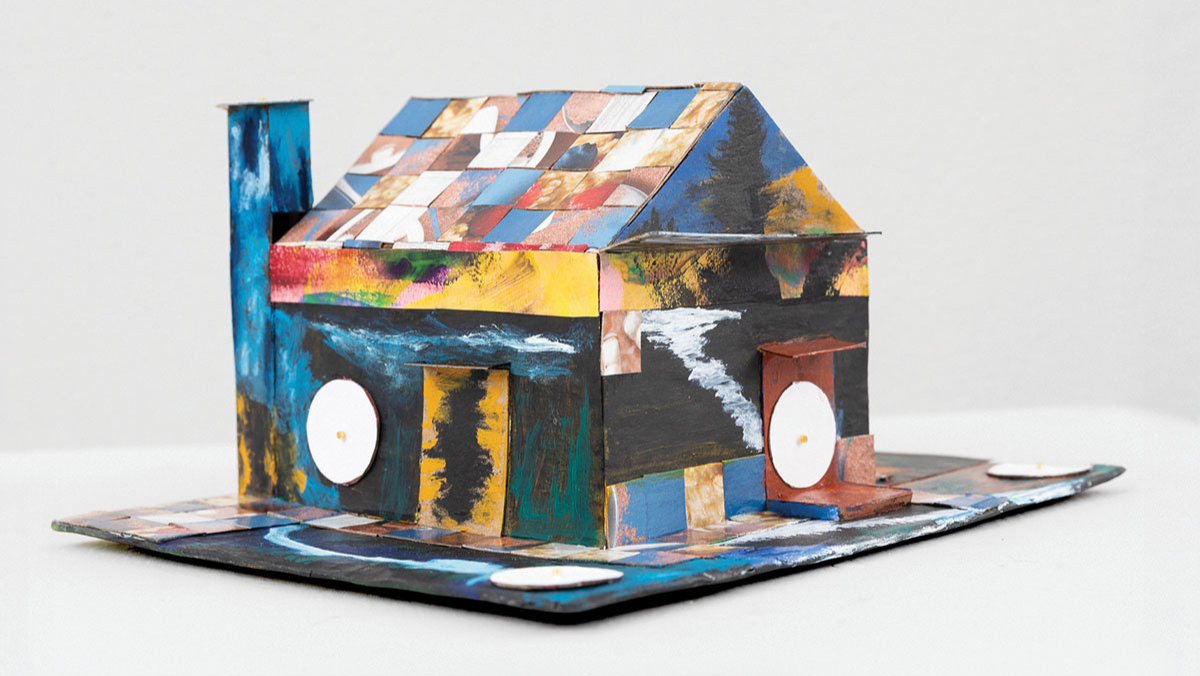
Dorm A at Green Bay Correctional Institution was one hundred and twelve beds arranged in rows, separated from a dayroom with four phones, a bank of showers, and a few televisions mounted too high on the wall.
It was maximum security, technically, but with the appearance of something softer. Men played Spades, Scrabble, and Dominoes for hours. They cooked together from canteen ingredients, improving recipes that passed from hand to hand like heirlooms. On holidays they held rap battles and poetry slams — the audience pooling snacks into a bag for the winner. All this under the tacit approval of correctional officers. There was music, language, laughter. Something approaching a kind of ordinary.
Places like Dorm A exist in a state that incarcerates people at one of the highest rates in the country. The numbers ripple outward into kitchens, bedrooms, school pick-up lines.
KV Severallevels, a Milwaukee poet and rapper who began writing while incarcerated, tells me this without romance. He is careful about that. He knows what the place was built for. But he also knows what it became, briefly, under pressure: somewhere people survive together. “Oddly enough, I think I felt the closest feeling to ‘home’ while incarcerated when I was in maximum security prison,” he says.
And when he says it, I don’t think of Dorm A in Green Bay. I think of my brother playing Spades outside a cell across the country. The distance between their stories collapses for me there.
There was no father in our house when I was growing up. Not really. So my older brother stepped into that vacancy early. Not as a parent, but as a presence, a buffer, someone taller than me who stood between the world and whatever I was still too young to absorb. He taught me how to make a little money, how to throw a punch, how to read a room. I learned a rigid form of masculinity from him before I had other language for it.
When he disappeared into addiction, and then into jail and prison, that presence went with him. Nothing dramatic happened in the house the day he left. No furniture taken. No walls fell. But something structural vanished anyway. I became older without feeling older. I became careful in ways he wasn’t. I learned to scan rooms the way he taught me, but for different reasons.
That is how I began to understand what home was in the shadow of incarceration. Not a place you return to, but a role you grow into without being asked.
KV found home where it shouldn’t exist — inside an institution designed to erase it. I lost home where it should have been guaranteed.
He tells me that in Dorm A, men shared everything. Food, stories, grief, legal advice, the architecture of who they were before they arrived. They shared pain as a form of intimacy. They built routines because routines gave shape to days that otherwise had none.
During the Great Lockdown of 2007, when the rest of the prison was confined to cells twenty-four hours a day, Dorm A remained communal. The contrast intensified everything. Bonds were forged not just through friendship but through shared exception, the knowledge that this space was temporary.
“That lockdown forged bonds that will never be broken,” KV tells me.
I can’t know the precise grief of incarceration or the connections it forms, but for a moment I allow myself some gentleness for KV. His presence complicates the picture I’ve been handed of who survives prison. Getting to know him has given me another way to imagine my brother’s life inside. I picture my brother in the audience at a poetry slam where KV is the MC, holding the room together with a voice that has become familiar to me. This imagining is the closest bridge I can draw to my brother reading my own poetry. He knows the boy I was but not the adult I am. We’ve built our versions of home on opposite sides of the same absence.
My mother lied when my brother was gone.
To neighbors she said he was in trade school, learning to be an electrician or plumber. Family believed he had joined the military. Anything but prison. The lie wasn’t denial, really. It was a kind of domestic survival strategy. It protected her from judgement and me from the community prophesying my future.
Home became a place where truth was edited to preserve dignity.
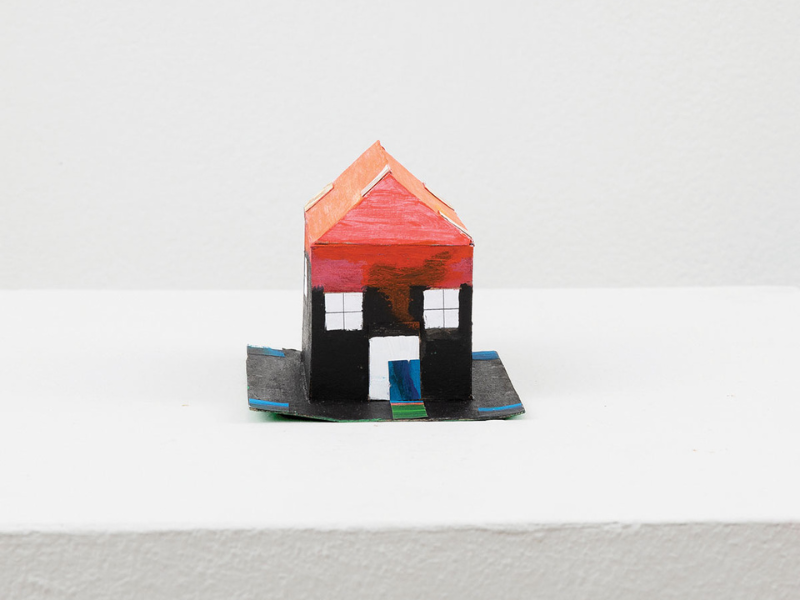
When I was young, police came to our door often enough that it became a kind of ritual. Unwelcome but familiar. Once, an officer who wanted to date my mother brought my brother home in handcuffs. It was dark, raining. The officer made my brother remove his shoes and socks using his feet because his hands were cuffed behind him. He wanted my mother to see the pinprick marks between my brother’s toes — proof of a relapse he had successfully hidden from us.
The officer smiled while he did this. Not cruelly but casually. Like someone delivering news he thought would be appreciated. Like a man dropping off a fruit basket at a beloved’s door.
That grin taught me something before I had the words for it: that help from the state arrives with a cost, and that cost is often dignity. If you’re lucky, not more than that.
KV says that inside, the system was always present. In wages that amounted to pennies, in appeals to the appellate court that rarely succeeded, in rules that shifted without warning. The men in Dorm A saw the state as a common enemy. Not in a conspiratorial way but in a practical one. They understood that survival depended on each other more than on any promise of justice.
Outside, I learned something similar in a quieter way.
When I was eleven or twelve, a neighbor I only kind of knew ran quickly past me. So fast, as if there was an avalanche on the other side of the complex. Less than a minute behind came two police officers. One of them doubled back, grabbed my shirt collar, and shook me hard, demanding to know where the man had gone. I was terrified. I pointed. The neighbor was arrested.
The following Monday I was jumped by a group of his friends, two of whom were wielding baseball bats, and I landed in the hospital with internal bleeding and broken ribs.
No one from the police station followed up with me or my family. Proximity to authority did not mean proximity to safety. It meant consequence.
KV tells me that prison took his childhood from him.
He says, “I’m rough and jagged and rigid in ways that my mom notices, that my wife points out, that my coworkers are shocked by.”
I think about how I became rough before I became an adult.
In high school, my friends and I used to save plastic spoons from the cafeteria and pretend to shank each other in the hallway until the spoons snapped. It was a joke. It was a game. It was also rehearsal.
We didn’t talk much about college. We talked about how we might survive if we ended up inside. Prison was not a tragedy in the abstract. It was a future likely enough to be practiced.
That kind of anticipation changes you. It teaches you to carry yourself differently, to be less surprised by harm, to grow into toughness before you grow into softness.
At the end of our talk, KV says, “I have a perspective that demands gratitude for the simple things, eating to be relieved of hunger…doors which open in both directions at my leisure, contact with friends and family and silence and solitude all at my discretion.”
KV tells me that when he left prison, he carried home with him in notebooks, in poems, in recipes, in fragments of community. He carried friendships, values, discipline. He left behind small thinking, complaining, and any belief in the system as a moral authority.
Freedom did not give back what was lost. It just put the pieces somewhere else.
I think about what I carried out of my childhood: vigilance, ritual, the ability to stand alone.
KV is still building home now — in language, in music, performing across Wisconsin, in rooms where people gather. I am still building it too, in quieter ways, in classrooms, in sentences, in the attempt to make something durable from what was unstable.
Maybe home is not where harm is absent. Maybe it’s where harm doesn’t get the last word. Maybe it’s what we build after something already broke.
I don’t know.
I only know that incarceration does not begin at sentencing and does not end at release. It begins wherever children learn to live within its shadow and wherever adults learn to survive inside it.
Home, under those conditions, is not a place. Not an immovable object. Home is a practice. Something you do, not somewhere you land.