![Art by Stacey Steinberg, image [cropped] of print, collage titled Fault Lines](https://www.wisconsinacademy.org/sites/wisconsinacademy.org/files/styles/spotlight_880x495/public/Steinberg_Fault%20Lines_JWG_Webpage%201200x676-2.jpg?itok=0WdQC3Wx)
![Art by Stacey Steinberg, image [cropped] of print, collage titled Collapse](https://www.wisconsinacademy.org/sites/wisconsinacademy.org/files/styles/spotlight_880x495/public/Steinberg_Collapse_JWG_Webpage%201200x676-2.jpg?itok=eBNd_0hO)
Location
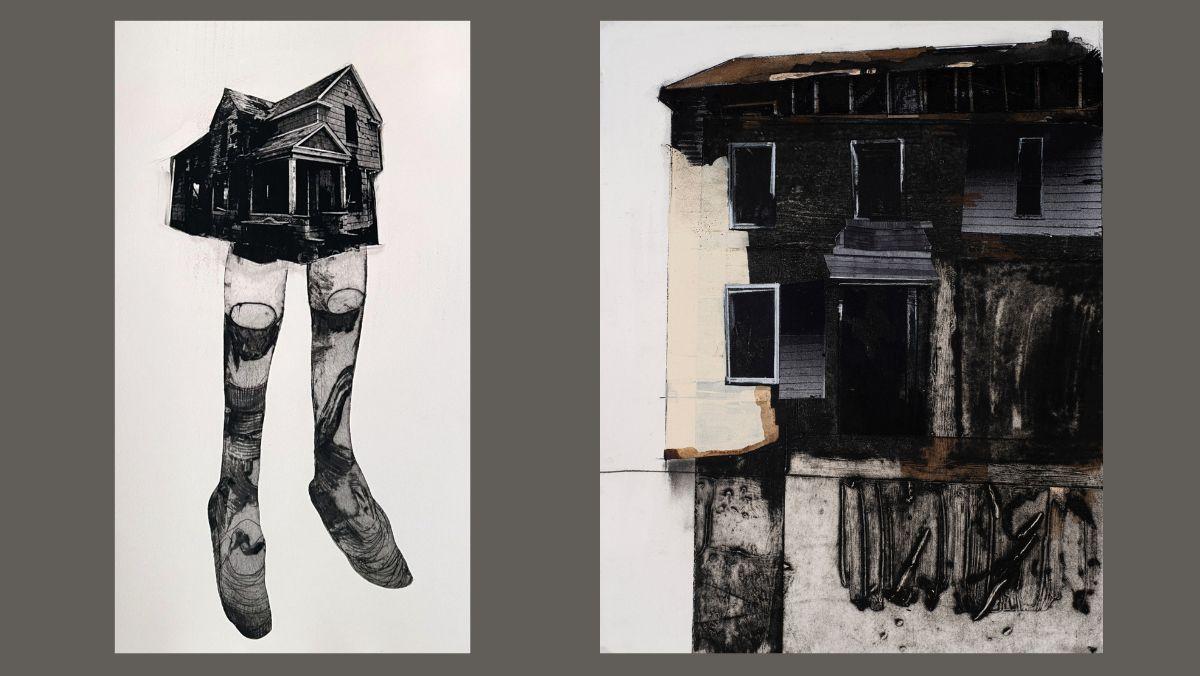
The body of work in Stacey Steinberg's solo exhibition, Foundation, considers architecture as both physical structure and psychological landscape. Houses become portraits and repositories of memory. Neighborhoods become maps of identity. The spaces we inhabit do more than shelter us; they absorb the traces of our lives until they become inseparable from our own histories. A house remembers.
And a foundation is more than what supports a building. It is the unseen structure that shapes memory, identity and belonging. Our foundations are built through relationships, rituals and the places that define our lives. Even after a home is altered, abandoned or destroyed, those foundations endure—not only in the landscape, but within us.
Home is never static. It changes over time, gathering evidence of celebration, routine, absence, grief and renewal. Like the people who inhabit them, buildings carry the marks of resilience and vulnerability. They are constructed, repaired, neglected, preserved and, sometimes, lost. Yet even when the physical place disappears, its emotional architecture remains. We continue to carry it with us, reconstructing it through memory, longing and imagination. The houses in these works exist in uncertain states—fragmented, suspended and incomplete. They occupy the space between memory and place, permanence and impermanence, presence and absence. Some appear familiar yet impossible, reflecting the way memory reshapes the places we once knew. As physical structures dissolve, they become internal landscapes, revealing foundations of home that are not fixed in geography but carried within the body.
Foundation asks where home ultimately resides. Is it held within walls and neighborhoods, or within the invisible structures we continue to build throughout our lives? Perhaps a foundation is not simply what remains beneath a house. Perhaps it is what remains within us.